Disclosure: This site may earn a commission if you purchase through links on this page, at no additional cost to you. This does not influence our editorial analysis.
Does Neuromind Pro Work? How It's Supposed to Work, Explained
Neuromind Pro's marketing describes a formula built around ingredients with plausible cognitive-support roles. This page walks through that proposed mechanism step by step, and — just as importantly — explains where 'plausible mechanism' stops and 'proven effect' would need to begin.
Last reviewed: 2026-10-09
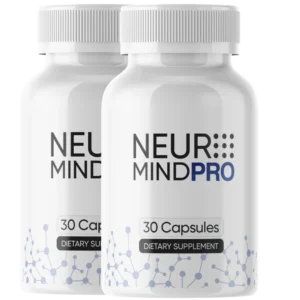
The Manufacturer's Proposed Mechanism
Neuromind Pro follows a formula structure common across the nootropic-supplement category: pair a fast-acting stimulant component with slower-acting botanical ingredients that have some research behind memory or stress-related outcomes, then market the combination as broad "cognitive support."
In practice, that means: caffeine, theacrine, and theobromine are included for their stimulant-related alertness effects; Bacopa monnieri, Rhodiola rosea, and Huperzia serrata are included for their studied associations with memory or fatigue-related outcomes; and L-tyrosine is included for its studied role in performance under acute stress. The B vitamins round out the formula as general nutritional support.
Biological Plausibility Is Not the Same as Proof
This is the single most important distinction on this page. A formula is "biologically plausible" when there's a reasonable, mechanism-based explanation for why an ingredient could affect cognition — for example, caffeine's well-documented effect on the adenosine system, or Bacopa's studied interaction with memory-related pathways.
Plausibility is where research starts, not where it ends. It does not, by itself, tell you:
- Whether the effect actually occurs reliably in a general population
- Whether the effect occurs at the specific (and here, partly undisclosed) dose used
- Whether combining multiple plausible ingredients produces an additive, neutral, or even counteracting effect
- Whether the effect is meaningfully different from a placebo response
Why the Undisclosed Blend Doses Matter for This Question
Dose matters enormously in supplement research. A compound studied at 300 mg may behave very differently — or not show any measurable effect at all — at 50 mg. Because six of Neuromind Pro's seven blend ingredients don't have individually disclosed amounts, it's not possible to compare this specific formula against the doses used in the studies referenced for those ingredients.
That doesn't mean the doses are necessarily too low — it means nobody outside the manufacturer can currently verify one way or the other. This is the same limitation we describe in detail on our ingredients page.
See the Full Ingredient Breakdown →What a Realistic Expectation Looks Like
Based on the disclosed ingredients, the most plausible near-term effect is likely tied to the stimulant components — similar to what you might expect from a caffeinated beverage, potentially with some added smoothness from theacrine or theobromine. Any additional benefit from the botanical ingredients, if present at effective doses, would more likely build gradually with consistent use rather than appear after a single serving — consistent with how those ingredients are typically studied.
What we can't responsibly tell you is that this specific product is "proven" to improve memory or focus — that claim would go beyond what the available evidence, or the label's own disclosures, actually support.
How It Works FAQ
Does Neuromind Pro actually work?
Some individual ingredients in the formula have research suggesting effects on alertness, memory, or stress-related fatigue. Whether the finished Neuromind Pro product, at its actual (partly undisclosed) doses, reliably produces those effects for a general user isn't something that ingredient-level research alone can confirm. We don't have independent clinical testing on this specific product to point to either way.
How long does it take to notice an effect?
Stimulant-related ingredients like caffeine, theacrine, and theobromine can produce a noticeable effect within roughly 30–60 minutes for many people, similar to coffee. Botanical ingredients like Bacopa or Rhodiola are typically studied over weeks of consistent use rather than a single dose, so any effect from those would likely build more gradually, if it occurs at all.
Is 'biological plausibility' the same as proof it works?
No. Biological plausibility means there's a reasonable, science-based explanation for why an ingredient could have an effect. It's a starting point for research, not a substitute for it. A formula can be biologically plausible and still not have been proven effective as a finished product.
Why can't ingredient research prove the whole product works?
Ingredient studies typically test a single compound at a specific, disclosed dose, often in isolation. Neuromind Pro combines multiple ingredients at doses that aren't fully disclosed. Even if each ingredient works as studied individually, combining them doesn't guarantee the same — or even a similar — effect, and no combined-formula study is cited on the label to confirm it.
For the full ingredient-by-ingredient evidence review, or to see how this weighs against the price, continue exploring the review.
Check Current Neuromind Pro Price →